Showing posts with label Charlotte Mason. Show all posts

Tuesday, March 23, 2010

Priorites of a Home School


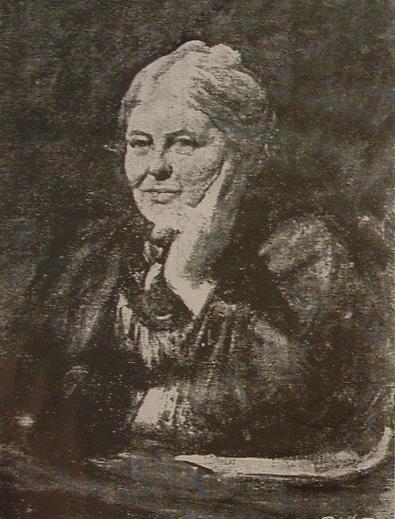
I have just finished reading a delightful and insightful article written by Charlotte Mason for the 3rd volume of The Parents' Review (1892-93) called "The Home School".

I am going to do my best to narrate back what I remember from my reading......and I'm seriously fighting the urge to grab the paper and re-read it (that would so be cheating!)

Miss Mason was writing for those parents that were homeschooling their children using the curriculum provided by her school. She felt that no parent should be ashamed or disappointed if their children were unable to attend a public or private school because she was convinced that on the whole the Home School was the best teaching and training ground for children provided the parents took a serious and active role in educating their children.

I was vastly encouraged when when she stated that it is nothing for a teacher to organize and teach a class of 20 or so children of the same age and grade but a much more difficult task to teach and organize a class of 3 children in 3 different grades.....Amen sister!

Miss Mason takes great pains to enumerate on the benefits of both education and experience for the teacher. She tells us that experience is not necessarily the best teacher in all matters because so often bad habits are trained through experience when this could have been avoided through better education.
She is quick to point out though that the experience of learning is quite a different thing and when one has a teachable spirit there are very few doors that aren't able to be opened.

Next she lays out the very basic priorities that should be included in every Home School.

Most importantly is the learning of the Bible. She places the importance of learning the stories from the bible for not only moral and language learning but mostly of spiritual training. The system used in her schools was for a short portion of the scriptures to be read and then to be narrated back word for word as possible by the student. She encourages the teacher or parent after the narration to feel free to ask a few questions if this will help the understanding of the student but to never consider the answers as narration. She also encourages the teacher to add any historical notes or insights that will be a help to the student.
She very specifically points out that there should be NO written narrations by children under the age of 10 siting that it is too easy for the child to put out poor work because they are not capably ready to write good composition before this time.
I was convicted by her statement that it is much easier for a teacher to set the student to write a narration because that then frees up her time for other things but that the more difficult task is for the teacher/parent to require a spoken narration from the student because it takes her time and attention.
(for a simple bible reading plan see my Scribd documents in the side bar)

Next in importance is the learning of History. She encourages the learning of Greek and Roman history and details some of the benefits of children learning from Plutarch's Lives.

She also encourages all teachers to put much effort into Natural History, not just in reading about areas of Natural History but to get in touch with Nature.
It is very important she says for children to keep tadpoles and caterpillars and other creatures to learn first hand about them. What is read in books should be a side benefit of learning Natural History not the whole of the education.

Physical Education and drills rank high in Miss Mason's list as well and she encourages teacher/parents to not just have their children go through the motions of the drills (Swedish) but to make sure that the children are using and training their muscles in the work.

Lastly, she encourages all parents to take the brave step into the world of foreign languages. I appreciate how she breaks down the learning to just 40 lines of a french tale for 1 term as a manageable amount. Miss Mason shows of the high esteem she has for children by affirming her belief that the students will surprise the teacher/parent by how much is learned and retained by consistent work in this area.

As a closing reminder Miss Mason clarifies that these schooling priorities should never consume a child's whole day. She reminds teacher/parents that 5 of the 13 waking hours of the child should be spent in free play and 3 of those say between the hours of 2 and 5 pm should be spent out-of-doors. Short lessons as always are an important essential and she places importance on not nagging or badgering or humiliating the student who does not complete the work set before them in the proper amount of time. There is nothing like personal experience for the child to learn to value time and do the work allotted for that specific time.

I hope you were encouraged and educated a little by my narration but I would highly recommened that you read the real article yourself.
You can find it here in the Parents' Review articles posted under Volume 3, title The Home School.

Tuesday, March 9, 2010

Thoughtfulness

In a thinking mode lately and seeking and praying for direction and guidance.

Do I switch to workboxes?

Should I start Wes with Kindergarten work?

How do I fit in everything I feel we are missing?


Mostly, I'm fighting to keep my focus. To not be distracted by what others are doing and what works for them, but prioritizing what our goals are and how to meet them.


Praying:
His priorities become mine
I do not waste my time on frivolous ways

Reading:
Magnanimity Newsletter
PNEU articles
For the Children's Sake
School Education


Sunday, February 14, 2010

Slowing Down

Recently due to some narrating issues that we were having I've had to slow our school progress down a bit.

Granted, this is not easy for me to do.
I'm the kind of gal that likes to check things off of the list....any list. In fact I will make lists of things that I've done just so I can check them off!
I know some of you can relate.

So when I look at the weekly schedule laid out for my kiddos on Ambleside it does not even compute with me that we have a choice NOT to do a certain book or to go at our own pace through other books.

Since this is our second year in using Ambleside I have been able to let a few book choices go but I start to get really worried and anxious if we fall behind in our weekly readings. So you can imagine my dismay upon doing some research and reading into helping my oldest son, Tom, better his narrations when I found one of the best methods would be to SLOW DOWN.

Not just slow the speed of my reading....but literally to take smaller sections of the books and require more narrations.
I wasn't sure how this would work out since we have struggled all year to keep up (adorable baby distractions and the like).

But on the encouragement of a veteran CM'er and her own experiences with narrating I jumped in with both feet.
We started with the last few pages we were reading from "Wind in the Willows" and I took it sentence by sentence reminding both Tom and Ali often to listen to the "first part" of the sentence to be able to "tell back".

I think that last page & a half took us about a 1/2 an hour. But by the end of it Tom was already doing better and was listening and narrating from the "first part" of the sentence rather that just telling back the last portion of what I had read.
Ali, who doesn't usually struggle with narrating unless out of laziness, was a bit frustrated at the slow going initially but gradually caught on and has also been giving better narrations.

We continued this for the rest of the week, sentence by sentence readings with the twins taking turns in narrating back to me specifically listening to the "first part" of the reading. Towards the end of the week I was able to do 2 sentences at a time and Tom has done a much better job of cohesively retelling them in his own words. I have also noticed that in the beginning both of the kids would try narrating back to me word for word what I read, but after encouraging them to use their own words they have been able to take a portion of the reading and tell it back in their own words but with greater detail than if I had given them a larger reading.

I am encouraged though still slightly fretful over the slow progress we will most likely make. I have had to continually remind myself that it would be a pointless journey through these "living" books if my children were unable to train their minds to the habit of attention.

"A vigorous effort of will should enable us at any time to fix our thoughts. Yes; but a vigorous self-compelling will is the flower of a developed character; and while the child has no character to speak of, but only natural disposition, who is to keep humming-tops out of a geography lesson, or a doll's sofa out of a French verb? Here is the secret of the weariness of the home schoolroom––the children are thinking all the time about something else than their lessons; or rather, they are at the mercy of the thousand fancies that flit through their brains, each in the train of the last. "Oh, Miss Smith," said a little girl to her governess, "there are so many things more interesting than lessons to think about!"

Where is the harm? In this: not merely that the children are wasting time, though that is a pity; but that they are forming a desultory habit of mind, and reducing their own capacity for mental effort."

Home Education pg 139


In the wonderful issues of the online newsletter Magnanimity published by Karen Glass, she has an article that has been a breath of fresh air to me entitled "The Still Progress of Growth".
In it she points out that we need to view our children's growth and education like a tree growing. We may not see with our eyes any growth but we do not always know what is going on under the surface. Roots are being pushed deeper, limbs become denser, sap is rising to produce more fruit.
Our children are the same way. Being able to check off of a list that we have read a particular chapter is fine, but if I have not taken the time to slow down and train habits of attention and listening so that they may order their thoughts. Then I have not necessarily made "progress".


"Is there not some confusion of ideas about this fetish of progress? Do we not confound progress with
movement, action, assuming that where these are there is necessarily
advance? Whereas much of our activity is like the waves of the sea, going
always and arriving never. What we desire is the still progress of growth
that comes of root striking downwards and fruit urging upwards. And this
progress in character and conduct is not attained through conditions of
environment or influence but only through the growth of ideas, received with
conscious intellectual effort."
A Philosophy of Education, p. 297.


To read the newsletter Magnanimity - join here.
To read the article The Still Progress of Growth join the yahoo group and find Volume 1, Issue 2.


Thursday, February 11, 2010

How to Keep School going all week

Still working on this one!
This year we've been using a 5-day week schedule but I'm seeing the need to revamp it and change to a 4-day schedule. It seems we end up doing 4 days anyway and at least 1 day is a catch-up or errand day.
Also recently my husbands work schedule has changed so that every other Friday he has the day off and obviously it would be nice to be more free from a schedule when he is home.

It is extremely helpful to be able to make cd's of the books we are reading from librivox and take with us if we are traveling. Someday here I will get another mp3 player or maybe (Lord willing) even an ipod! I'm always leery of purchasing higher priced electronics just because of the destructive nature of children......especially mine, but I'm really missing the help of my old mp3 player in getting all of the kids readings done.

If you have and ipod or mp3 player available to you I would highly suggest using it for your kids school readings. I found that my oldest son, who often has difficulties attending to my reading with other noise and distractions going on around him, could narrate back more of a story he had listened to on the mp3 player because the other noise was eliminated.

Don't be discouraged if your schedule seems to need constant revamping and reworking....I have realized that this is just life and our job is to remain fluid in it. Be purposeful in your school time but don't fret the small stuff.


Wednesday, February 3, 2010

Narration Encouragement

We sailed through our first term this year with loads of great and thorough narrating especially from my oldest son who has always struggled with language arts stuff. I was pleased and excited and really felt that we had made it....problems solved, they knew what to do and had acquired the habit of attention for narrating purposes.
Then we had a long Christmas break and ever since starting our 2nd term narrating has been a HUGE struggle. Some for Ali but mostly for Tom, sigh.

So I've been trying to evaluate what has changed and what might need to be changed to help the poor kid out.
First, I remember that I used a narration jar for most of the 1st term and both kids really enjoyed that, so I finally made up more questions this morning and restocked our narration jar.
Second, because I've been frustrated and Tom has been unwilling I've found myself falling into the habit of quizzing, goading and just plain nagging him. Bad mom!!

Teachers become so inured to this practice of goading their pupils' thoughts along prescribed channels, that information not given within the limits they choose to place seems illogical and discursive.

Today, blessedly, I received a very informative and inspiring email from yahoo group AmbleLore. Seriously if you aren't part of this group you simply must join. I don't get to read it that often but when I have read it has been an excellent addition to my education as an educator.

Go, right now and join this group and then look for the message titled On Narration. You won't regret it, even if narration is not a struggle right now this author gives incentive for you and your children to take it to a new level.

You can also visit my scribd docs and find the narrations cards that I just made today (copied from several sources) for our narration jar.


Saturday, November 14, 2009

Narration Gathering

Sometimes I just need a one-stop shop for all the ideas that I find around the internet. So in order to facilitate my being able to find what I need when I need it and to hopefully help some of you out as well I'm gathering all the links and articles that have helped me with narration.

I'll also post these in the side-bar.


We use narration daily instead of tests or review or questioning. After I finish reading a portion of whatever book we are working through I pass around our Narration Jar and let the kids each pick a question. Some questions aren't always appropriate for what we have read so it's not a hard and fast thing.
Each child must narrate. I don't require long answers but "I don't remember" or "I don't know" are not passing grade:) If a child balks or can't seem to come up with anything I either move on to the next child (I have 2 in 2nd grade-twins) or I may ask a few general questions to help stir their memory. I have often found it helpful to narrate to them what I remember. Sometimes I have one of the children ask a question and each of us has to answer it.
I have found that using the narration jar and questions gets better co-operation and more enthusiasm than me just asking "what do you remember".
I haven't been really good and consistent about writing down narrations but I am making a better effort towards that end.

In case you are wondering, out of the 3 children old enough to give me narrations my son (8) by far gives me a shorter narration than my girls, but he has made tremendous progress. Tom didn't begin talking until he was 3 and spent a couple years in speech therapy, but after just one year of narrating his speech was brought up to his age level and now in our third year of narrating he is able to remember and narrate more than the last sentence!

It has been my experience that shorter portions of harder or highly detailed books makes narration much more doable for my kids. Pictures of what we are reading about are sometimes helpful as well.
My daughters both enjoy drawing their narrations while my son does not. Ali and Emi can narrate after longer passages while Tom does better with shorter ones.
The slower I read the better.

Anyways, I hope this helps and encourages you. If you are struggling or feeling like this isn't working please don't give up.
Relax and try again tomorrow.


NARRATION WHY AND HOW:

The art of Narrating
Narration Reminders from Jimmie's Collage
Narration and the Narration Cube
Articles on Narrating from Lindafay
Narration Jar from A Dusty Frame
Narration Ideas from Simply Charlotte Mason
Parents' Review Article at AmblesideOnline
Narration Bookmarks at Gentle Art of Chaos (I love these!)


Narration Starters

Friday, September 18, 2009

Week 3


Week 3 has come to a close, mostly. I'm still in the process of getting our wall timeline put together, I have the people printed out and ready to mount and finally today got the date strips printed out so maybe tomorrow or next week we will actually get all of it posted on the wall.
Since I'm new to posting our weekly wrap-ups I didn't grab the camera until today so my pics are fairly limited.

Highlights:
Seeing our monarch chrysalis turn into a butterfly!
Playing battleship for math lesson.


We are starting to get into somewhat of a routine around here although not as consistent as I would like. This week we ran late everyday but it still worked out well and I felt more relaxed by spreading out the lessons than trying to cram them all in during the morning hours.
Ali and Tom are doing well with their "daily vitamins" i.e. Calculadders, but we've had to start back at the beginning using Math-it. I'm not using a textbook for math until they have their addition facts down cold and are able to quickly add large numbers. I plan on using the shortcut adding methods suggested in "How Stevie Learned his Math".


Gathered around for circle time
I'm still working on streamlining Circle time and making it more enhancing for the younger kids and will hopefully have things in better order next week.

Egg-citing Levitation experiment......it worked!


Experimenting with different density liquids

It took a bit of help but they did get the concept of battleship and were really enjoying themselves until they bumped their boards and lost the pegs.


Copywork using Italic Handwriting from Penny Gardner


Read more Weekly Wrap-up entries Here.


Tuesday, September 15, 2009

New Experiences in Nature Study 2

The miraculous happened this morning!
While breakfast was being made one of the children noticed that the chrysalis had changed color and was now almost black. I knew this meant that the butterfly would emerge soon but I wasn't prepared for how soon.
Ali noticed it first, the butterfly sitting outside of the chrysalis, we immediately took it outside to the porch where it could be in the sun and removed the cheesecloth lid. I was a bit worried at first because its wings were so small, in fact they were only half the size of the butterflies body. But it did not take very long before they began to lengthen and spread out as the butterfly shook them.
We spent a lot of the next 2 hours or so watching it grow and move. It would unroll its tongue out and move its legs and continued to shake its wings. After awhile it just sat very, very still and I explained to the kids (who kept wanting to poke it) that butterflies rest with their wings closed.
About 2.5 hours after it emerged and while Ali and Will were watching it took off in flight.


Thursday, April 30, 2009

Spelling Made Easy in the Early Years

I'll be honest from the start here, spelling has never been a problem for me. I have siblings who struggle with it but honestly until I read Charlotte's writings on spelling I could never figure out what their problem was. As I've studied teaching approaches and learning styles I have figured out that my learning style (60% visual and 40% auditory) plays a large part in why I don't struggle with spelling and why others do. The more of a visual learner you are the less trouble you will likely have because you automatically "see" the words and remember them.


But the fact is, the gift of spelling depends upon the power the eye possesses to 'take' (in a photographic sense) a detailed picture of a word; and this is a power and habit which must be cultivated in children from the first. CM vol 1 pg 241


Of course as a teacher though, the last thing that I wanted was for it to be a problem for any of my children, so I have always been interested in the various programs and curriculum that tout complete success in this area. And while most of them seem to be on the right track and do probably accomplish the end goal I had a hard time swallowing the amount of money and time most of them required. Having a large family with children close in age has forced me to look at all things in the view of "how much time will it take?", "how much does it cost?" and "how simple is it?". Upon reading Miss Mason's spelling methods and instructions my criteria questions were answered satisfactorily. Not only is her method a logical approach to spelling success it is very easy to implement, takes very little time, cost nearly nothing and the results can be seen quickly.


Transcription (copywork) should be an introduction to spelling. Children should be encouraged to look at the word, see a picture of it with their eyes shut, and then write from memory. CM vol 1 pg 238


A Fertile Cause of Bad Spelling.––The common practise is for the teacher to dictate a passage, clause by clause, repeating each clause, perhaps, three of our times under a fire of questions from the writers. Every line has errors in spelling, one, two, three, perhaps. The conscientious teacher draws her pencil under these errors, or solemnly underlines them with red ink. The children correct in various fashions; sometimes they change books, and each corrects the errors of another, copying the word from the book or from the blackboard. A few benighted teachers still cause children to copy their own error along with the correction, which last is written three or four times, learned, and spelt to the teacher. The latter is astonished at the pure perversity which causes the same errors to be repeated again and again, notwithstanding all these painstaking efforts. CM vol 1 pg 240-241


The plan that Miss Mason lays out is very simple and this is how we have put it into practice in our home.


  • During phonics lesson there are always words that the child needs to write, I pick 2-3 of these words and after the child reads the word I ask them to look at the word closely and take a picture of it in their mind. I generally try to block out the other surrounding words to help them to focus better as well. Once they have the picture in their head I ask them to close their eyes and see it and then write it on their paper. I keep a very close watch on each letter they write and if I see them starting to write the wrong letter I stop them and have them re-take a picture of the word. At no time are they allowed to misspell the word.

  • I also implement spelling practice during the child's reading practice time. After they have completed their reading I pick out 2-3 words and have them take a picture in their mind. Instead of writing this word out though, I have them spell it out loud to me. Again I stop them immediately if a mistake is made and have them re-look at the word for another picture.


At first some of my kids were frustrated and didn't want to try, but after some encouragement and starting with 3-4 letter words they began to gain more confidence and have gradually increased their abilities.


When they have read 'cat,' they must be encouraged to see the word with their eyes shut, and the same habit will enable them to image 'Thermopylae.' This picturing of words upon the retina appears to be to be the only royal road to spelling; an error once made and corrected leads to fearful doubt for the rest of one's life, as to which was the wrong way and which is the right. CM vol 1 pg 241


Once the eye sees a misspelt word, that image remains; and if there is also the image of the word rightly spelt, we are perplexed as to which is which. CM vol 1 pg 241


A mistake that I made in the beginning was to allow the child to say the letters under their breath and then close their eyes and spell. This is not the way to train their eyes to see the word and should not be allowed to take place. I have also not put into practice these very easy steps for most of first grade and I do regret putting it aside for other topics. Kindergarten is a great place to start having the child practice seeing the words they are beginning to read and will give them a cause for much celebrating upon their success:)


Spelling must not be lost sight of in the children's other studies, though they should not be teased to spell. It is well to write a difficult proper name, for example, on the blackboard in the course of history or geography readings, rubbing the word out when the children say they can see it. The whole secret of spelling lies in the habit of visualising words from memory, and children must be trained to visualise in the course of their reading. They enjoy this way of learning to spell. CM vol 1 pg 243


Miss Mason also lays out how to continue increasing the child's ability and practice of spelling through dictation. She advocates not starting this until the child is 8-9 years old or 2nd to 3rd grade. I think the timing of this may depend a lot the child's maturity level but I would say that most children are capable of much more than we as their mothers ask of them. I will not comment much on dictation as we are just finishing up first grade right now, but as I learn more and begin using it I hope to share how it is working in our house.


Steps of a Dictation Lesson.––Dictation lessons, conducted in some such way as the following, usually result in good spelling. A child of eight or nine prepares a paragraph, older children a page, or two or three pages. The child prepares by himself, by looking at the word he is not sure of, and then seeing it with his eyes shut. Before he begins, the teacher asks what words he thinks will need his attention. He generally knows, but the teacher may point out any word likely to be a cause of stumbling. He lets his teacher know when he is ready. The teacher asks if there are any words he is not sure of. These she puts, one by one, on the blackboard, letting the child look till he has a picture, and then rubbing the word out. If anyone is still doubtful he should be called to put the word he is not sure of on the board, the teacher watching to rub out the word when a wrong letter begins to appear, and again helping the child to get a mental picture. Then the teacher gives out the dictation, clause by clause, each clause repeated once. She dictates with a view to the pointing, which the children are expected to put in as they write; but they must not be told 'comma,' 'semicolon,' etc. After the sort of preparation I have described, which takes ten minutes or less, there is rarely an error in spelling. If there be, it is well worth while for the teacher to be on the watch with slips of stamp-paper to put over the wrong word, that its image may be erased as far as possible. At the end of the lesson, the child should again study the wrong word in his book until he says he is sure of, and should write it correctly on the stamp-paper.


A lesson of this kind secures the hearty co-operation of children, who feel they take their due part in it; and it also prepares them for the second condition of good spelling, which is––much reading combined with the habit of imaging the words as they are read.


Illiterate spelling is usually a sign of sparse reading; but, sometimes, of hasty reading without the habit of seeing the words that are skimmed over. CM vol 1 pg 242-243


Saturday, April 18, 2009

First Grade - Copywork/Handwriting/Transcription

After a recent conversation it was brought to my attention that maybe I don't include enough handwriting, creative writing or spelling practice in my 1st graders curriculum.

While at first this comment rather bugged me; after some reflection and thought I decided to use it as an opportunity to analyze whether or not I was meeting my goals for my children in this area. And whether or not I was following the guidelines laid out by Charlotte Mason.

So after a bit of reading and research and thinking I have come up with the following. I feel this is a fair representation of Charlotte's guides and is workable for most 1st graders.

First off if you have read CM's "Home Education" you will notice that there is no mention of copywork in her writings, that is simply because she called it "transcription". You can reference her writings on transcription and handwriting here. (scroll down the page to parts X & XI)

"The earliest practice in writing proper for children of seven or eight should be, not letter writing or dictation, but transcription, slow and beautiful work..." CM vol. 1 pg. 238


First Grade Goals

  • Short Lessons, no longer than 10 -15 minutes

  • Learn 1 letter daily, gradually working up to short words and then sentences.


  • Avoid careless, sloppy work

I can only offer a few hints on the teaching of writing, though much might be said. First, let the child accomplish something perfectly in every lesson––a stroke, a pothook, a letter. Let the writing lesson be short; it should not last more than five or ten minutes. Ease in writing comes by practice; but that must be secured later. In the meantime, the thing to be avoided is the habit of careless work––humpy 'm's, angular o's. CM vol.1 pg. 233

Why you may ask should writing lessons be so short? After all doesn't a child need more practice to get better? And won't he surely forget what he has learned if his lessons do not encompass more than just 1 letter a day?
If you have observed a child of this age writing you will notice that the more that they write the more careless their letters become.
Unknowingly I experimented with this very principle this year while teaching Ali & Tom. Since they had learned their letters in Kindergarten using a workbook, I figured it would be too laborious for them to backtrack and relearn to write their letters in a perfect hand. And everybody said that they should be doing "copywork" for this first year. So we delved into transcribing short sentences accomplishing a couple per week. But I did not expect perfect work and therefore did not get it. It did not matter how short the sentence or how long it was as if they were incapable of turning out beautiful work. I also did not notice any change in their penmanship during other projects and this was very discouraging because if I truly believed what Charlotte said then I was not expecting enough from my children.
So we made a break.
I purchased Penny Gardner's Italic Handwriting and we started over from the beginning. I probably did not need to go back this far but it has proved to be worth it.
Some days they only turn out 1 letter perfectly, other days 1 word and some days several words of perfect handwriting. We have not added sentences yet but I am confident that as long as we continue through the perfect forming of each letter that by the start of next year they will be more than ready to produce the quality of penmanship that I desire.


"Of the further stages, little need be said. Secure that the child begins by making perfect letters and is never allowed to make faulty ones, and the rest he will do for himself; as for 'a good hand,' do not hurry him; his 'handwriting' will come by-and-by out of the character that is in him; but, as a child, he cannot be said, strictly speaking, to have character." CM vol. 1 pg. 234

As they have trained their eyes to look for perfect work I have noticed a difference in their handwriting during phonics lessons and in their nature notebooks. I do not expect perfect work outside of copywork but for their nature notebooks I ask them to write as nicely as they can.
I have found the best approach in training their eyes to "see" perfect work is to ask them if they think their work is "perfect". Nine times out of ten the will reply honestly and will correct their work if needed, the rest of the time I will point out how their letter differs from the original and then work on getting them to see what needs to change.
I should say as well that right now our writing lessons are not longer than about 5 minutes, but as Tom & Ali have become more accustomed to writing perfectly they have been able to accomplish a bit more each lesson. In the beginning though it was a major struggle for them to accomplish 1 letter perfectly.
I think it is wise for us moms to remember that in the case of copywork consistency and diligence in careful, beautiful copywork are much more important than having your child fill in pages of handwriting practice sheets.


Monday, March 23, 2009

Geography and Paddle-to-the-Sea

Could there possibly be a better choice for Year 1 students but this book Paddle to the Sea?

Tom, Ali and I have enjoyed reading through this book very much and have learned a lot about the great lakes in the process.
My DH grew up around the great lakes so the kids enjoy asking him questions about each lake that he has seen or been to. For instance we had just read about Lake Erie and where telling DH what we had learned and he was able to add that he had swam in that lake and that it was a murky lake.
We've used mostly maps for learning about the areas that Paddle drifts through and this has worked very well. I have a large U.S. map on our livingroom wall that we refer to for the big picture of where paddle was and is in each adventure.


I also printed out a couple of outline maps for the kids to color in. This map gives a nice view of all the lakes and surrounding states without any state or city names, while this map helps them to locate each state and lake by its name. As we read each chapter I have them color in any new area that we learn about and then we discuss the states that surround each lake and how to tell the difference on a map between each lake.


Another fun tool especially for Tom has been following Paddle's adventures on Google Earth. This has been fun to get a bird's eye view of the areas that Paddle floats through. We have also googled searched the Soo locks and various other landmarks to help with picturing the areas.
And for a grand finale of our geography lessons for the year we will be watching the movie of Paddle-to-the-Sea on youtube. The kids are bummed that I won't let them watch it now but I want them to use their own imaginations of what they think things looked like for Paddle before they see a movie of it. But since the movie is live action and not a cartoon it should be very enlightening to watch.

We are also working on a plan to visit the great lakes possibly next year.

Anyway enjoy your reading and if you've found other helpful links in your research please post them in the comments.


Friday, March 20, 2009

Term 3 Artist Study

For most of this year we have been using Harmony Fine Arts Grade 1 curriculum for our music and art appreciation and while I love this well put together curriculum I found that there were too many artists for my kids to get a good grasp on and I wasn't getting any of the wonderful extra activities in. So I decided to simplify a bit and go ahead and follow the Art rotation laid out on AmblesideOnline.

Now if you have not gone through AmblesideOnline with a fine toothpick comb yet, then please find an area and start clicking on all of those delightful links that have been provided. I just clicked on a few on the Art Schedule page and am really excited about using them.

In the past a member provided the art prints each term at a low cost but she is not able to do that anymore so you will need to find a way to get them yourself. I would highly recommend joining the AO Art yahoo group because you can download the terms artist pictures and those of past years. While you could print them out yourself at home I have found a cheap alternative that I wanted to share.

Since we have a fedex/kinkos store in the town that I frequent I got online yesterday and registered on their website and then placed an order to have the Van Gogh pictures printed out by them. This was unbelievably easy and took a matter of 10 minutes or so. I chose cardstock glossy paper and full-color copies to be made from the file that I had downloaded from the yahoo group and had uploaded to the kinkos site. And they have a promotion going right now for users to receive 20% off of a printing order so my total cost for having 7 pages printed was under $7!!!

Today I had errands to run in town and dropped by the store to pick up my prints. I was very happy with the results and can't wait to put them in use. I will be putting each print as we view it into a binder with page protectors. I also plan to keep my eyes open at garage sales for some nice 8 x 10 frames so that I can hang a few of our favorites up throughout the house.

Seriously, do you ever wonder what we would do without the internet!


Friday, March 13, 2009

Our First Crochet Lesson

Today I sat down with both Tom and Ali to begin teaching them crochet.
I followed Charlotte's advice and kept our lesson short (10-15 min.) so that neither of us would get frustrated. I also gave them each a lesson separately so that I could focus individually.

I followed the advice given here on teaching the basics to children and started by showing (visual) them how to make a slip knot and describing each step along the way. Then I let them try it out. It took a few tries and some extra showing but both of them got it and were able to make a nice slip knot.

Next I showed them the crochet hook and explained the different sizes and how they are lettered or numbered. It is best to start with as large a hook as possible and large yarn but all I had on hand was a size J hook and some wool yarn. Neither Tom or Ali seemed to be bothered by the sizes but if I can locate my size P or Q hook we may try that. I also showed the 2 different ways that the hook can be held (knife or pencil method) but they both automatically grabbed it and held it like I do (knife method).

Initially I started out from the slip knot and demonstrated a few chain stitches. I explained how we wanted to make "fat worms" not "hungry worms" and then showed how this was accomplished. After watching a few stitches being made I handed it over to them to try. After a little bit we found that it worked best for me to direct their hands as we made more stitches. This reduced frustration and correction so that they were able to make several stitches.
Most of our time was spent in proper hand position, holding the yarn and proper yarn tension. But all in all I think it went o.k.

I do think that I will also throughout the week be teaching each of them as well as Emi to finger knit. Working with yarn in this way will take some of the unfamiliarity away and they will be able to get results sooner. Finger knitting is what I first learned to do and spent many years making yards of rope.

You can watch a very good video of instruction for finger knitting here and here and a cute video of a different method here. You can also find some great projects to make using the rope made from finger knitting.


You can also find more info from my first post here.


Tuesday, March 10, 2009

Handiwork - Teaching crocheting

I'll be honest, I have neglected to focus on any handiwork diligently for the first 2 terms and so I find myself not having accomplished anything in this area for our 3rd term!
I had hoped to have Ali and Tom proficient in at least 1 area of handiwork by now, but there is no time like the present.
I have decided that crocheting is a good place to start, mostly because I'm still not a very accomplished knitter and because I have tons of yarn and crochet hooks.
Also I found these adorable patterns on Lion Brand yarn's website which I think will be a great motivation once they learn the basics of crochet. (you will need to register with this site to access the patterns)


I did a quick google search and came across this great website for teaching children how to crochet. This gives me a great starting point and their instructions are very user friendly and geared toward children.
So coming this next week I will be starting with the Slip knot and Chain stitch.
If you would like some pictures to show your kids or to help out you can find them at these sites:


And no post here would be quite complete without directing our thoughts back to Charlotte's ideas and thoughts on the subject of Handicrafts.


"The points to be borne in mind in children's handicrafts are: (a) that they should not be employed in making futilities such as pea and stick work, paper mats, and the like; (b) that they should be taught slowly and carefully what they are to do; (c) that slipshod work should not allowed; (d) and that, therefore, the children's work should be kept well within their compass."

CM Vol. 1, pg. 315-316


Tuesday, February 17, 2009

Kindergarten, Year 0 and Charlotte Mason

What to do, what to do? That is the question.
I've been reading, researching, thinking, praying and meditating about my daughter Emi and what kind of curriculum I should follow for her this next year. She is 5.5 right now and will turn 6 shortly before we start our next school year, so technically she would be Kindergarten age, but she has already completed the majority of Kindergarten requirements that a public school would teach her and has been through all of the books suggested in Year 0 on Ambleside. On the other hand I don't really feel comfortable throwing Year 1 work at her because I don't feel that she has the maturity to handle all of it. And the thought of having 2 in Year 2 and 1 in Year 1 next year with a new baby is not overly appealing.
So after much debating I think I have hit upon a curriculum that will be challenging to her but not discouraging and definitely doable for me.
I also am confident that this is what Miss Mason would have suggested as well.....wait a minute, I guess she already did!

First she has given us an entire book full of ideas (Home Education) and she also compiled a list of attainments that help bring into focus specific goals for a Kindergarten child. (You can find this list and other ideas for implementing at Ambleside under curriculum Year 0.)


And then she set out this excellent list of guidelines to help us along the way. Here is how I will be putting it into practice for Emi in our home. I will be starting her first term in a couple of weeks officially since that's when Tom and Ali will be starting Term 3 of Year 1.

I have added supplemental reading from Charlotte Mason's Home Education book for extra support, help and encouragement for anyone interested.


A FORMIDABLE LIST OF ATTAINMENTS FOR A CHILD OF SIX


1. To recite, beautifully, 6 easy poems and hymns
Pretty basic here, I'm letting her pick out the poems and we a hymn or two everyday so we may work on being able to recite some as well.

Spread out through a year this would mean 2 poems and 2 hymns each term so nothing too overwhelming.

vol. 1, pg. 222-224

2. To recite, perfectly and beautifully, a parable & a psalm

Miss Mason encourages memorizing out of the book of Mark and I have picked out Mark 4:1-9 and Psalm 1 for Emi.

vol. 1, pg. 222-224

3. To add & subtract numbers up to 10, with dominoes or counters

Emi has been learning these just from using manipulatives and such so this isn't a big deal we will just focus more on it. I will be starting her slowly in Ray's Arithmetic and she joins Ali and Tom in our Family Math games.

vol. 1, pg.253-264

4. To read - what and how much, will depend on what we are told of the child

We have already begun this using a mixture of CM methods, Reading Reflex and Ruth Beechick. She is progressing well although not fast enough to suit her eagerness so I will be stepping this up to being daily work instead of sporadically.

vol. 1, pg. 199-222

5. To copy in print-hand from a book

Right now we are working on one letter at a time concentrating on producing perfect work. Later we will start with short copywork pieces. I will be using Penny Gardner's Italics Beautiful Handwriting as a guide.

vol. 1, pg. 159-160 & pg. 233-240

6. To know the points of the compass with relation to their own home, where the sun rises and sets, and the way the wind blows

We will continue to talk and use compass terms while out of doors, she will also be keeping a weather/nature calendar throughout the year. I will be purchasing a compass for all of the kids to experiment with and learn how to use, I was also thinking of making a wind sock together and posting on on of the fence posts.

vol. 1, pg. 74-77


7. To describe the boundaries of their own home

Pretty self-explanatory here but I'll be re-reading what Charlotte had to say about this.

vol. 1, pg. 77

8. To describe any lake, river, pond, island etc. within easy reach

Make weekly trips to the aboretum, and other local nature sites and trails.

vol.1, pg. 48-50


9. to tell quite accurately (however shortly) 3 stories from Bible history, 3 from early American, and 3 from early Roman history

I will be reading to her from some different history books although I haven't quite nailed down which ones but will probably be On the Shores of the Great Sea by M.B. Sygne.

vol. 1, pg. 279-295


10. to be able to describe 3 walks and 3 views

Continue to take walks and use the approaches to increasing attentiveness that Miss Mason talks about.

vol. 1, pg. 45-48


11. to mount in a scrap book a dozen common wildflowers, with leaves (one every week); to name these, describe them in their own words, and say where they found them

vol. 1, pg. 51-56 & pg. 62-65

12. to do the same with leaves and flowers of 6 forest trees


13. to know 6 birds by song, color and shape

We have been making bird lapbooks recently which has allowed each child to focus on learning more information about their favorite backyard birds. We also keep our bird feeders filled and watch and discuss the birds that come every morning. Emi is very good at picking up and imitating bird songs so I will continue to expose her to individual songs and we will be keeping an attentive ear while outside.

vol. 1, pg. 59-62 & 89-92


14. to send in certain Kindergarten or other handiwork, as directed

I'll be starting her on some plastic canvas work and then moving on to crosstitch, knitting, and hand sewing over time.

vol. 1, pg. 315-316

15. to tell three stories about their own "pets" - rabbit, dog or catThis one should be interesting considering that we have no pets right now! My husband and I have agreed that a large family in a small house living in town can do without pets, but I might have to reconsider this and see if we can come up with a compromise:) I'm thinking of ordering an ant farm kit and we might look into a fish tank.

16. to name 20 common objects in French, and say a dozen little sentences

For our family we have decided to pursue learning Spanish instead of French. I do not learn foreign languages very easily and well so that will help me to be more patient as we learn together.

We have lyric language cd & dvd in spanish and will be purchasing Rosetta Stone for all of us to use.

vol. 1, pg. 80-81 & 301-307

17. to sing one hymn, one French song, and one English song

We will be following the Ambleside hymn list and adding in some other folk songs as well as some French or Spanish songs.

vol. 1, pg. 133 & 314-315

18. to keep a caterpillar and tell the life-story of a butterfly from his own observationsWe may end up purchasing this as a kit but hopefully we will catch one this fall!

vol. 1, pg. 59-61


As you can see there is little to no book work mostly just enjoyable fun learning time with some minor direction.

You can read more about what Miss Mason thought about Kindergarten here.

Also here are some great blog posts concerning this list and Kindergarten.


Piney Woods Homeschool


Wednesday, February 4, 2009

My Favorite Charlotte Mason Resources

Here is a list of the many different resources that I go to for help, information, encouragement and guidance in implementing Charlotte Mason's educational philosophies in our homeschool.


WEBSITES & BLOGS

Ambleside Online

Higher Up and Further In Blog

Understanding Charlotte Blog

Simply Charlotte Mason

In the Sparrow's Nest Blog

Handbook of Nature Study Blog

Hearts and Trees Blog

In the Heart of my Home Blog

Penny Gardner

A Charlotte Mason Education

Dominion Family Blog


BOOKS & EBOOKS

Real Learning by Elizabeth Foss

Charlotte Mason Study Guide by Penny Gardner

Laying Down the Rails by Sonya Shafer

For the Children's Sake/For the Family's Sake by Susan Schaeffer Macaulay

The Original Homeschooling Series by Charlotte Mason

When Children Love to Learn by Elaine Cooper

A Charlotte Mason Companion by Karen Andreola

A Pocketful of Pinecones by Karen Andreola

Education is..... by Sonya Shafer FREE

Masterly Inactivity by Soyna Shafer FREE

Education the Wholehearted Child by Clay & Sally Clarkson

Honey for a Child's Heart by Gladys Hunt

Handbook of Nature Study by Anna Botsford Comstock


SCHOOL HELPS

LibriVox Recordings - Free downloadable audio books

Project Gutenberg - Free downloadable books

E-Nature - America's Wildlife Resource

Paddle-to-the-Sea with Google Earth

Outline Maps to print

Seterra - Free geography game


There are also many great yahoo groups that correspond with Charlotte Mason and Ambleside Online if you are wanting to know how other women work this educational approach in their own homes I would highly recommend finding these groups on yahoo.

If you go to Ambleside Online and click on the "Introduction to Ambleside Online" you will find several resources and links available.

Also a great way to meet other CM moms and be inspired is to join the Charlotte Mason Blog Carnival!


Don't forget to go on over to Kim's Blog to check out other resources.

Wednesday, January 28, 2009

How I found Charlotte Mason and Why we use it

It all started back when we first got married, except I didn't know it at the time. We were given the book "For the Family's Sake" by Susan Schaeffer Macaulay and while it looked interesting I just never got around to reading it until the year that I was nursing my 5th baby William. I usually go through a boat-load of books while nursing and this book happened to be one that I picked up. Not only does she give lots of good advice she also leads you into a general, approachable understanding about Charlotte Mason and her educational philosophies.

Also around that same time the Spring 2007 issue of The Old Schoolhouse Magazine showed up and as I perused it I ran across an article where a mom , Ali Telfer, shared how they were using this FREE curriculum called Ambleside Online and how much they were enjoying it, so this intrigued me as well, I mean who can pass up FREE.

I don't know if I had heard of Charlotte Mason persay but I did know that somehow Karen Andreola was "into" that kind of education. Honestly I thought it was an unschooling approach which I was not interested in simply because of my personality.

After reading several chapters in "For the Family's Sake", and doing some internet research I borrowed the book "Pocketful of Pinecones" from my library and that is probably what finally lit my fire. Each of these bits of information that I had come across not only heightened my curiosity but touched something deep within me that needed answers.

I spent a lot of time researching on the internet and then ordered a used set of the "The Original Homeschooling Series" by Charlotte Mason. At this point I was reading everything that I could get my hands on and when those books showed up I devoured the first volume in short order, some of it actually bringing me to tears!

As I read I couldn't help but think back on my own schooling years (all homeschooled) and realize that those times when I learned the most and remembered the most all came from reading living books and being left alone in nature. I knew that that was exactly what I wanted for my children and the idea of a broad education not only excited me as a teacher but as a person.

I have always had a huge appetite for knowledge and have never ceased to educate myself continually throughout my years out of school although only a few months were spent in college. I knew that at the heart of my goals for my children would be that they would never lose that eager curiosity and longing to know more. I saw the steps to keep this flame lit in their lives given to me through Charlotte's writings.

I also was searching for the kind of education that would not stifle my oldest son, Thomas's, unique personality. Thomas did not speak more than a few words until he was 3 years old and had every indication that he was somewhere on the autism spectrum. We had him in speech therapy and I had radically changed his diet but I knew that it would probably be a life-long effort to teach him. Since language was his main issue I needed tools to use in schooling at home that would increase his vocabulary and his ability to express himself. Enter Narration! This has been an answer to prayers, not an easy one mind you but very effective in Tom's life.

We started using narration (a technique his speech therapist was using as well) during his Preschool and Kindergarten years and while it was a huge struggle at first and I would often become very frustrated we were able to see the benefits when we returned to speech therapy after a years absence. For financial reasons we were unable to continue speech therapy during his Kindergarten year but I used as many CM principles as I could, especially narrating. When we returned to his therapy his advisor was completely astounded by the progress he had made. Literally she saw a completely different boy than the previous year had shown. His vocabulary had gone from being 2-3 years behind his age to being in a normal range, his understanding of reading material was at a normal range etc. Everything that we had thought would never be possible for him or he would struggle with was gone! We continued his therapy only until they had finished evaluating where he was at and it was decided that he no longer needed their help. One of the greatest compliments that I received was from his advisor who had been very concerned about us homeschooling him; she said as we left that she had no doubt that he would succeed and catch up completely because he was being homeschooled! Praise the Lord! She also wanted to know if I had a teaching degree. Nope just Charlotte Mason.


To make a long story short I can say most emphatically that a Charlotte Mason style education is a perfect fit for our family. I continue to read and learn more and have never ceased to be inspired by her writings and wisdom for our school and for me as a mom.

Everyday is an adventure and because of the wisdom that Charlotte so willing shared as an educator to parents and her hearts desire to see parents teaching their children I do not feel lost and unsure about the direction to take in education my own children . She has given us a tried and true method to follow and taken the guess work out of providing our children with a broad and complete education that will enhance the rest of their lives.


P.S. Go on over to Homesteaders Heart for more about homeschooling the Charlotte Mason way.


Monday, January 19, 2009

Thoughts on Poetry Memorization

"...it is well to store a child's memory with a good deal of poetry, learnt without labour."

Charlotte Mason vol. 1, pg.224


Thanks to the encouragement from Jacci and her post on poetry I have added it to our schooling for the rest of this school year.

First I accessed the word documents provided through the yahoo group that Jacci started and printed them off for easy reference. Next I read each of them to Alissa and Thomas and let them pick which one they wanted to memorize.

Alissa (age 7) chose the Tiger, Tiger poem by William Blake and Thomas (age 7) chose The Moon's the North Wind's Cookie by Vachel Lindsay. I also picked a few selections from our Favorite Poems Old and New book for Emily (age 5.5) to choose from, she ended up picking The Little Turtle also by Vachel Lindsay.

Initially we have simply read through them a few times and then started working on the first couple of lines in each poem which they have memorized with ease, even to the point of memorizing eachother's poems.

But then I directed my self back to Home Education the 1st book in Charlotte Mason's series and here is what I gleaned.


  • The poem should be read through to the child in the beginning.

  • The next day while the child is occupied with an activity or play, read it again

  • Read again during an odd or unexpected time throughout each and every day following.

  • By the weeks end the child will have heard 6 or more readings according to the length of the poem and in the end should be able to say the poem which they have not learned.


"The child must not try to recollect or to say the verse over to himself, but, as far as may be, present an open mind to receive an impression of interest. Half a dozen repetitions should give children possession of such poems as 'Dolly and Dick', 'Do you ask what the birds say?' 'Little lamb, who made thee?' and the like. The gains of such a method of learning are, that the edge of the child's enjoyment is not taken off by weariful verse by verse repetitions, and, also, that the habit of making mental images is unconsciously formed." CM vol. 1, pg. 225


"Let the child lie fallow till he is six, and then, in this matter of memorising, as in others, attempt only a little, and let the poems the child learns be simple and within the range of his own thought and imagination. At the same time, when there is so much noble poetry within a child's compass, the pity of it, that he should be allowed to learn twaddle!"
CM vol. 1 pg. 226

Ways that I plan on accomplishing this even though I have 3 different children working on 3 different poems.


  • While washing dishes and doing kitchen chores I will choose 1 to read

  • While eating a meal I will choose a different one to read

  • While they are brushing teeth and getting ready for bed I will choose a different one to read

  • I will also keep them in a handy location so that I can catch those odd and unexpected times to give a reading.


I'll check back in at the end of the week hopefully to see what kind of progress we have made.