Showing posts with label Narrating. Show all posts

Tuesday, March 23, 2010

Priorites of a Home School


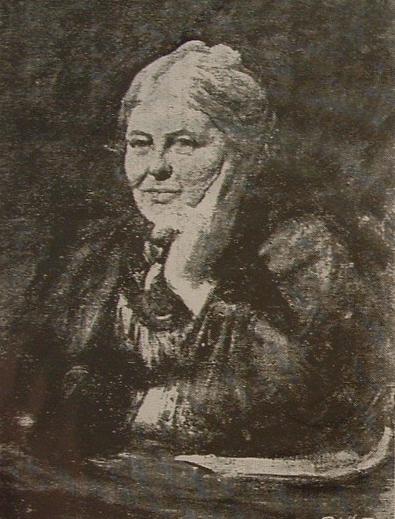
I have just finished reading a delightful and insightful article written by Charlotte Mason for the 3rd volume of The Parents' Review (1892-93) called "The Home School".

I am going to do my best to narrate back what I remember from my reading......and I'm seriously fighting the urge to grab the paper and re-read it (that would so be cheating!)

Miss Mason was writing for those parents that were homeschooling their children using the curriculum provided by her school. She felt that no parent should be ashamed or disappointed if their children were unable to attend a public or private school because she was convinced that on the whole the Home School was the best teaching and training ground for children provided the parents took a serious and active role in educating their children.

I was vastly encouraged when when she stated that it is nothing for a teacher to organize and teach a class of 20 or so children of the same age and grade but a much more difficult task to teach and organize a class of 3 children in 3 different grades.....Amen sister!

Miss Mason takes great pains to enumerate on the benefits of both education and experience for the teacher. She tells us that experience is not necessarily the best teacher in all matters because so often bad habits are trained through experience when this could have been avoided through better education.
She is quick to point out though that the experience of learning is quite a different thing and when one has a teachable spirit there are very few doors that aren't able to be opened.

Next she lays out the very basic priorities that should be included in every Home School.

Most importantly is the learning of the Bible. She places the importance of learning the stories from the bible for not only moral and language learning but mostly of spiritual training. The system used in her schools was for a short portion of the scriptures to be read and then to be narrated back word for word as possible by the student. She encourages the teacher or parent after the narration to feel free to ask a few questions if this will help the understanding of the student but to never consider the answers as narration. She also encourages the teacher to add any historical notes or insights that will be a help to the student.
She very specifically points out that there should be NO written narrations by children under the age of 10 siting that it is too easy for the child to put out poor work because they are not capably ready to write good composition before this time.
I was convicted by her statement that it is much easier for a teacher to set the student to write a narration because that then frees up her time for other things but that the more difficult task is for the teacher/parent to require a spoken narration from the student because it takes her time and attention.
(for a simple bible reading plan see my Scribd documents in the side bar)

Next in importance is the learning of History. She encourages the learning of Greek and Roman history and details some of the benefits of children learning from Plutarch's Lives.

She also encourages all teachers to put much effort into Natural History, not just in reading about areas of Natural History but to get in touch with Nature.
It is very important she says for children to keep tadpoles and caterpillars and other creatures to learn first hand about them. What is read in books should be a side benefit of learning Natural History not the whole of the education.

Physical Education and drills rank high in Miss Mason's list as well and she encourages teacher/parents to not just have their children go through the motions of the drills (Swedish) but to make sure that the children are using and training their muscles in the work.

Lastly, she encourages all parents to take the brave step into the world of foreign languages. I appreciate how she breaks down the learning to just 40 lines of a french tale for 1 term as a manageable amount. Miss Mason shows of the high esteem she has for children by affirming her belief that the students will surprise the teacher/parent by how much is learned and retained by consistent work in this area.

As a closing reminder Miss Mason clarifies that these schooling priorities should never consume a child's whole day. She reminds teacher/parents that 5 of the 13 waking hours of the child should be spent in free play and 3 of those say between the hours of 2 and 5 pm should be spent out-of-doors. Short lessons as always are an important essential and she places importance on not nagging or badgering or humiliating the student who does not complete the work set before them in the proper amount of time. There is nothing like personal experience for the child to learn to value time and do the work allotted for that specific time.

I hope you were encouraged and educated a little by my narration but I would highly recommened that you read the real article yourself.
You can find it here in the Parents' Review articles posted under Volume 3, title The Home School.

Sunday, February 14, 2010

Slowing Down

Recently due to some narrating issues that we were having I've had to slow our school progress down a bit.

Granted, this is not easy for me to do.
I'm the kind of gal that likes to check things off of the list....any list. In fact I will make lists of things that I've done just so I can check them off!
I know some of you can relate.

So when I look at the weekly schedule laid out for my kiddos on Ambleside it does not even compute with me that we have a choice NOT to do a certain book or to go at our own pace through other books.

Since this is our second year in using Ambleside I have been able to let a few book choices go but I start to get really worried and anxious if we fall behind in our weekly readings. So you can imagine my dismay upon doing some research and reading into helping my oldest son, Tom, better his narrations when I found one of the best methods would be to SLOW DOWN.

Not just slow the speed of my reading....but literally to take smaller sections of the books and require more narrations.
I wasn't sure how this would work out since we have struggled all year to keep up (adorable baby distractions and the like).

But on the encouragement of a veteran CM'er and her own experiences with narrating I jumped in with both feet.
We started with the last few pages we were reading from "Wind in the Willows" and I took it sentence by sentence reminding both Tom and Ali often to listen to the "first part" of the sentence to be able to "tell back".

I think that last page & a half took us about a 1/2 an hour. But by the end of it Tom was already doing better and was listening and narrating from the "first part" of the sentence rather that just telling back the last portion of what I had read.
Ali, who doesn't usually struggle with narrating unless out of laziness, was a bit frustrated at the slow going initially but gradually caught on and has also been giving better narrations.

We continued this for the rest of the week, sentence by sentence readings with the twins taking turns in narrating back to me specifically listening to the "first part" of the reading. Towards the end of the week I was able to do 2 sentences at a time and Tom has done a much better job of cohesively retelling them in his own words. I have also noticed that in the beginning both of the kids would try narrating back to me word for word what I read, but after encouraging them to use their own words they have been able to take a portion of the reading and tell it back in their own words but with greater detail than if I had given them a larger reading.

I am encouraged though still slightly fretful over the slow progress we will most likely make. I have had to continually remind myself that it would be a pointless journey through these "living" books if my children were unable to train their minds to the habit of attention.

"A vigorous effort of will should enable us at any time to fix our thoughts. Yes; but a vigorous self-compelling will is the flower of a developed character; and while the child has no character to speak of, but only natural disposition, who is to keep humming-tops out of a geography lesson, or a doll's sofa out of a French verb? Here is the secret of the weariness of the home schoolroom––the children are thinking all the time about something else than their lessons; or rather, they are at the mercy of the thousand fancies that flit through their brains, each in the train of the last. "Oh, Miss Smith," said a little girl to her governess, "there are so many things more interesting than lessons to think about!"

Where is the harm? In this: not merely that the children are wasting time, though that is a pity; but that they are forming a desultory habit of mind, and reducing their own capacity for mental effort."

Home Education pg 139


In the wonderful issues of the online newsletter Magnanimity published by Karen Glass, she has an article that has been a breath of fresh air to me entitled "The Still Progress of Growth".
In it she points out that we need to view our children's growth and education like a tree growing. We may not see with our eyes any growth but we do not always know what is going on under the surface. Roots are being pushed deeper, limbs become denser, sap is rising to produce more fruit.
Our children are the same way. Being able to check off of a list that we have read a particular chapter is fine, but if I have not taken the time to slow down and train habits of attention and listening so that they may order their thoughts. Then I have not necessarily made "progress".


"Is there not some confusion of ideas about this fetish of progress? Do we not confound progress with
movement, action, assuming that where these are there is necessarily
advance? Whereas much of our activity is like the waves of the sea, going
always and arriving never. What we desire is the still progress of growth
that comes of root striking downwards and fruit urging upwards. And this
progress in character and conduct is not attained through conditions of
environment or influence but only through the growth of ideas, received with
conscious intellectual effort."
A Philosophy of Education, p. 297.


To read the newsletter Magnanimity - join here.
To read the article The Still Progress of Growth join the yahoo group and find Volume 1, Issue 2.


Wednesday, February 3, 2010

Narration Encouragement

We sailed through our first term this year with loads of great and thorough narrating especially from my oldest son who has always struggled with language arts stuff. I was pleased and excited and really felt that we had made it....problems solved, they knew what to do and had acquired the habit of attention for narrating purposes.
Then we had a long Christmas break and ever since starting our 2nd term narrating has been a HUGE struggle. Some for Ali but mostly for Tom, sigh.

So I've been trying to evaluate what has changed and what might need to be changed to help the poor kid out.
First, I remember that I used a narration jar for most of the 1st term and both kids really enjoyed that, so I finally made up more questions this morning and restocked our narration jar.
Second, because I've been frustrated and Tom has been unwilling I've found myself falling into the habit of quizzing, goading and just plain nagging him. Bad mom!!

Teachers become so inured to this practice of goading their pupils' thoughts along prescribed channels, that information not given within the limits they choose to place seems illogical and discursive.

Today, blessedly, I received a very informative and inspiring email from yahoo group AmbleLore. Seriously if you aren't part of this group you simply must join. I don't get to read it that often but when I have read it has been an excellent addition to my education as an educator.

Go, right now and join this group and then look for the message titled On Narration. You won't regret it, even if narration is not a struggle right now this author gives incentive for you and your children to take it to a new level.

You can also visit my scribd docs and find the narrations cards that I just made today (copied from several sources) for our narration jar.


Saturday, November 14, 2009

Narration Gathering

Sometimes I just need a one-stop shop for all the ideas that I find around the internet. So in order to facilitate my being able to find what I need when I need it and to hopefully help some of you out as well I'm gathering all the links and articles that have helped me with narration.

I'll also post these in the side-bar.


We use narration daily instead of tests or review or questioning. After I finish reading a portion of whatever book we are working through I pass around our Narration Jar and let the kids each pick a question. Some questions aren't always appropriate for what we have read so it's not a hard and fast thing.
Each child must narrate. I don't require long answers but "I don't remember" or "I don't know" are not passing grade:) If a child balks or can't seem to come up with anything I either move on to the next child (I have 2 in 2nd grade-twins) or I may ask a few general questions to help stir their memory. I have often found it helpful to narrate to them what I remember. Sometimes I have one of the children ask a question and each of us has to answer it.
I have found that using the narration jar and questions gets better co-operation and more enthusiasm than me just asking "what do you remember".
I haven't been really good and consistent about writing down narrations but I am making a better effort towards that end.

In case you are wondering, out of the 3 children old enough to give me narrations my son (8) by far gives me a shorter narration than my girls, but he has made tremendous progress. Tom didn't begin talking until he was 3 and spent a couple years in speech therapy, but after just one year of narrating his speech was brought up to his age level and now in our third year of narrating he is able to remember and narrate more than the last sentence!

It has been my experience that shorter portions of harder or highly detailed books makes narration much more doable for my kids. Pictures of what we are reading about are sometimes helpful as well.
My daughters both enjoy drawing their narrations while my son does not. Ali and Emi can narrate after longer passages while Tom does better with shorter ones.
The slower I read the better.

Anyways, I hope this helps and encourages you. If you are struggling or feeling like this isn't working please don't give up.
Relax and try again tomorrow.


NARRATION WHY AND HOW:

The art of Narrating
Narration Reminders from Jimmie's Collage
Narration and the Narration Cube
Articles on Narrating from Lindafay
Narration Jar from A Dusty Frame
Narration Ideas from Simply Charlotte Mason
Parents' Review Article at AmblesideOnline
Narration Bookmarks at Gentle Art of Chaos (I love these!)


Narration Starters