Monday, September 7, 2009

New Experiences in Nature Study

This term in school we are studying insects as suggested in the Ambleside Online rotation. Initially I had planned on using Apologia's "Flying Creatures of the Fifth Day" but felt that it was a bit too much to handle for me as a teacher this year. Instead I downloaded Barb's "Outdoor Hour Challenges" for insects and plan on using them. I also spent some time reading portions of the Handbook of Nature Study to familiarize myself with what insects we should look out for and some places to find them.
As I was browsing through the butterfly section I read how you could find Monarch Caterpillars on milkweed plants especially in the month of September, so on Monday, our nature study day, we walked to the end of our block where I knew there were several uncut milkweed plants. It took us a bit of looking and poking around but just before we were ready to give up we spotted a caterpillar sitting on a leaf.


The kids quickly ran back home and got a jar and some scissors so that we could take it home. Luckily I thought to grab an extra top from another milkweed plant to stick in the big jar at home because this would come in handy very soon.
We brought "stripey" home, put him and a couple stalks of milkweed into a gallon size glass jar, spread some cheesecloth across the top and then waited.....and waited......and waited.
I thought we had killed him somehow when after 24 hours he hadn't so much as moved a muscle, but lo and behold he was in the process of shedding skin. We were able to observe the tail-end of it and then stood in amazement over the next few days as we watched this little caterpillar eat, and eat, and eat and eat.
The boys would try to race the caterpillar at supper time to see if they could eat as much as fast as the caterpillar did; my husband and I would laugh as we watched it's little head tick back and forth while it ate reminding us of a typewriter and my girls got completely grossed out as the bottom of the jar filled with caterpillar droppings!
Once everyday I would boil some water on the stove to add some humidity to the air (not that it was needed much) because we were instructed not to let the air get too dry. We also replenished the food supply a couple of times and cleaned out the droppings as well.
On Saturday I took it out to clean the jar and add fresh milkweed but noticed that the caterpillar was hanging upside down and it's back-end was attached to the stem. I decided to leave it and just see what would happen. Sure enough later on it let go of the stem and just hung so I assumed that it would be changing into a chrysalis soon.
We missed the transformation because it happened while we were at church but you can see how it happens here.


Can you imagine the excitement when we came home and saw no longer a two inch upside down caterpillar but a tiny little jade chrysalis?

Now we wait. According to HNS it will take about 12 days to mature into a butterfly, but the changes to the chrysalis each day are absolutely amazing!

"The monarch chrysalis is, I maintain, the most beautiful gem in Nature's jewel csket; it is an oblong jewel of jade, darker at the upper end and shading to the most exquisite whitish green below; outlining this lower paler portion are shining flecks of gold."
HNS page 307-308


Wednesday, June 10, 2009

Squidoo lenses that excite me


Make your Own Notebooking Pages

Creating Geography Treasure Boxes

Using Drawing with Children

Native American Crafts & Activities


I have found notebooking resources for the book Seabird and Pagoo which we will be using in Year 2 of Ambleside Online this next year but I am wanting to try one for the Tree in the Trail book as well. I haven't found any notebooking pages for that book yet so I will be attempting to make my own in the next few weeks.
I really like the idea of the geography treasure boxes as well. My little sis will be a short-term missionary in Kenya next year so I will be incorporating a unit study style of learning for our family while she is away. I'm planning on focusing on Africa as a whole and then zeroing in on Kenya. It should work out nice since we will be reading about David Livingstone as well.


Monday, May 25, 2009

Baby is Here!


We have been blessed with the early arrival of an adorable baby girl!
You can read more at this blog.

Monday, May 11, 2009

Finishing up School

Officially we are done with school!
Last week was rough and distracting so we didn't do a great job of getting stuff done. I plan on continuing copywork, phonics, and reading lessons throughout the summer and need to make out a rough schedule for that so that it actually gets done:)
We do have 1 more Shakespeare play to read but other than that we have competed all of the reading for Year 1 from Ambleside. We also finished up our read-aloud Pinnochio which we all enjoyed thoroughly. Next on the list will probably be Little House on the Prairie.
For this summer I'll have the kids join a summer reading program through the library and I'm going to try to get us out of the house to various free nature locations.

I have been contemplating how to go about implementing our schedule this next year and am leaning towards a 12 weeks on 4 weeks off schedule. This would have us taking off December, April and August and continuing with school through the other 9 months of the year. I think I'm just going to have to try it to see whether or not it works for our family. I like the idea of it I just know that July can be an incredibly busy month for us with 4 birthdays and swimming lessons etc.
At least I have a few months to decide:)


Monday, May 4, 2009

Utilizing Yahoo Groups for your CM Homeschool

I am continually amazed at the amount and wealth of information that is available through the internet these days! While I have not even begun to tap all of the resources listed through Ambleside Online I have found even another outlet of amazing information through YahooGroups.

I highly recommend searching out these groups as well as using the Yahoo search tool to find other groups you might be interested in. I found several just by typing in "Charlotte Mason" and "Ambleside".


Here is a list of the groups that I have joined:


This may seem like a lot but not every group has a ton of activity and I always opt for the daily digest emails so that my inbox does not become too overloaded. I usually just scan the titles of each digest and if I'm interested in a particular post I click on that link. Also, I rarely post on these, mostly just glean information from others and utilize the files sections. The FILES are where I have found many wonderful treasures. Not every group will have files to access but a lot of them do and they are well worth your time to investigate.


Thursday, April 30, 2009

Spelling Made Easy in the Early Years

I'll be honest from the start here, spelling has never been a problem for me. I have siblings who struggle with it but honestly until I read Charlotte's writings on spelling I could never figure out what their problem was. As I've studied teaching approaches and learning styles I have figured out that my learning style (60% visual and 40% auditory) plays a large part in why I don't struggle with spelling and why others do. The more of a visual learner you are the less trouble you will likely have because you automatically "see" the words and remember them.


But the fact is, the gift of spelling depends upon the power the eye possesses to 'take' (in a photographic sense) a detailed picture of a word; and this is a power and habit which must be cultivated in children from the first. CM vol 1 pg 241


Of course as a teacher though, the last thing that I wanted was for it to be a problem for any of my children, so I have always been interested in the various programs and curriculum that tout complete success in this area. And while most of them seem to be on the right track and do probably accomplish the end goal I had a hard time swallowing the amount of money and time most of them required. Having a large family with children close in age has forced me to look at all things in the view of "how much time will it take?", "how much does it cost?" and "how simple is it?". Upon reading Miss Mason's spelling methods and instructions my criteria questions were answered satisfactorily. Not only is her method a logical approach to spelling success it is very easy to implement, takes very little time, cost nearly nothing and the results can be seen quickly.


Transcription (copywork) should be an introduction to spelling. Children should be encouraged to look at the word, see a picture of it with their eyes shut, and then write from memory. CM vol 1 pg 238


A Fertile Cause of Bad Spelling.––The common practise is for the teacher to dictate a passage, clause by clause, repeating each clause, perhaps, three of our times under a fire of questions from the writers. Every line has errors in spelling, one, two, three, perhaps. The conscientious teacher draws her pencil under these errors, or solemnly underlines them with red ink. The children correct in various fashions; sometimes they change books, and each corrects the errors of another, copying the word from the book or from the blackboard. A few benighted teachers still cause children to copy their own error along with the correction, which last is written three or four times, learned, and spelt to the teacher. The latter is astonished at the pure perversity which causes the same errors to be repeated again and again, notwithstanding all these painstaking efforts. CM vol 1 pg 240-241


The plan that Miss Mason lays out is very simple and this is how we have put it into practice in our home.


  • During phonics lesson there are always words that the child needs to write, I pick 2-3 of these words and after the child reads the word I ask them to look at the word closely and take a picture of it in their mind. I generally try to block out the other surrounding words to help them to focus better as well. Once they have the picture in their head I ask them to close their eyes and see it and then write it on their paper. I keep a very close watch on each letter they write and if I see them starting to write the wrong letter I stop them and have them re-take a picture of the word. At no time are they allowed to misspell the word.

  • I also implement spelling practice during the child's reading practice time. After they have completed their reading I pick out 2-3 words and have them take a picture in their mind. Instead of writing this word out though, I have them spell it out loud to me. Again I stop them immediately if a mistake is made and have them re-look at the word for another picture.


At first some of my kids were frustrated and didn't want to try, but after some encouragement and starting with 3-4 letter words they began to gain more confidence and have gradually increased their abilities.


When they have read 'cat,' they must be encouraged to see the word with their eyes shut, and the same habit will enable them to image 'Thermopylae.' This picturing of words upon the retina appears to be to be the only royal road to spelling; an error once made and corrected leads to fearful doubt for the rest of one's life, as to which was the wrong way and which is the right. CM vol 1 pg 241


Once the eye sees a misspelt word, that image remains; and if there is also the image of the word rightly spelt, we are perplexed as to which is which. CM vol 1 pg 241


A mistake that I made in the beginning was to allow the child to say the letters under their breath and then close their eyes and spell. This is not the way to train their eyes to see the word and should not be allowed to take place. I have also not put into practice these very easy steps for most of first grade and I do regret putting it aside for other topics. Kindergarten is a great place to start having the child practice seeing the words they are beginning to read and will give them a cause for much celebrating upon their success:)


Spelling must not be lost sight of in the children's other studies, though they should not be teased to spell. It is well to write a difficult proper name, for example, on the blackboard in the course of history or geography readings, rubbing the word out when the children say they can see it. The whole secret of spelling lies in the habit of visualising words from memory, and children must be trained to visualise in the course of their reading. They enjoy this way of learning to spell. CM vol 1 pg 243


Miss Mason also lays out how to continue increasing the child's ability and practice of spelling through dictation. She advocates not starting this until the child is 8-9 years old or 2nd to 3rd grade. I think the timing of this may depend a lot the child's maturity level but I would say that most children are capable of much more than we as their mothers ask of them. I will not comment much on dictation as we are just finishing up first grade right now, but as I learn more and begin using it I hope to share how it is working in our house.


Steps of a Dictation Lesson.––Dictation lessons, conducted in some such way as the following, usually result in good spelling. A child of eight or nine prepares a paragraph, older children a page, or two or three pages. The child prepares by himself, by looking at the word he is not sure of, and then seeing it with his eyes shut. Before he begins, the teacher asks what words he thinks will need his attention. He generally knows, but the teacher may point out any word likely to be a cause of stumbling. He lets his teacher know when he is ready. The teacher asks if there are any words he is not sure of. These she puts, one by one, on the blackboard, letting the child look till he has a picture, and then rubbing the word out. If anyone is still doubtful he should be called to put the word he is not sure of on the board, the teacher watching to rub out the word when a wrong letter begins to appear, and again helping the child to get a mental picture. Then the teacher gives out the dictation, clause by clause, each clause repeated once. She dictates with a view to the pointing, which the children are expected to put in as they write; but they must not be told 'comma,' 'semicolon,' etc. After the sort of preparation I have described, which takes ten minutes or less, there is rarely an error in spelling. If there be, it is well worth while for the teacher to be on the watch with slips of stamp-paper to put over the wrong word, that its image may be erased as far as possible. At the end of the lesson, the child should again study the wrong word in his book until he says he is sure of, and should write it correctly on the stamp-paper.


A lesson of this kind secures the hearty co-operation of children, who feel they take their due part in it; and it also prepares them for the second condition of good spelling, which is––much reading combined with the habit of imaging the words as they are read.


Illiterate spelling is usually a sign of sparse reading; but, sometimes, of hasty reading without the habit of seeing the words that are skimmed over. CM vol 1 pg 242-243


Saturday, April 18, 2009

First Grade - Copywork/Handwriting/Transcription

After a recent conversation it was brought to my attention that maybe I don't include enough handwriting, creative writing or spelling practice in my 1st graders curriculum.

While at first this comment rather bugged me; after some reflection and thought I decided to use it as an opportunity to analyze whether or not I was meeting my goals for my children in this area. And whether or not I was following the guidelines laid out by Charlotte Mason.

So after a bit of reading and research and thinking I have come up with the following. I feel this is a fair representation of Charlotte's guides and is workable for most 1st graders.

First off if you have read CM's "Home Education" you will notice that there is no mention of copywork in her writings, that is simply because she called it "transcription". You can reference her writings on transcription and handwriting here. (scroll down the page to parts X & XI)

"The earliest practice in writing proper for children of seven or eight should be, not letter writing or dictation, but transcription, slow and beautiful work..." CM vol. 1 pg. 238


First Grade Goals

  • Short Lessons, no longer than 10 -15 minutes

  • Learn 1 letter daily, gradually working up to short words and then sentences.


  • Avoid careless, sloppy work

I can only offer a few hints on the teaching of writing, though much might be said. First, let the child accomplish something perfectly in every lesson––a stroke, a pothook, a letter. Let the writing lesson be short; it should not last more than five or ten minutes. Ease in writing comes by practice; but that must be secured later. In the meantime, the thing to be avoided is the habit of careless work––humpy 'm's, angular o's. CM vol.1 pg. 233

Why you may ask should writing lessons be so short? After all doesn't a child need more practice to get better? And won't he surely forget what he has learned if his lessons do not encompass more than just 1 letter a day?
If you have observed a child of this age writing you will notice that the more that they write the more careless their letters become.
Unknowingly I experimented with this very principle this year while teaching Ali & Tom. Since they had learned their letters in Kindergarten using a workbook, I figured it would be too laborious for them to backtrack and relearn to write their letters in a perfect hand. And everybody said that they should be doing "copywork" for this first year. So we delved into transcribing short sentences accomplishing a couple per week. But I did not expect perfect work and therefore did not get it. It did not matter how short the sentence or how long it was as if they were incapable of turning out beautiful work. I also did not notice any change in their penmanship during other projects and this was very discouraging because if I truly believed what Charlotte said then I was not expecting enough from my children.
So we made a break.
I purchased Penny Gardner's Italic Handwriting and we started over from the beginning. I probably did not need to go back this far but it has proved to be worth it.
Some days they only turn out 1 letter perfectly, other days 1 word and some days several words of perfect handwriting. We have not added sentences yet but I am confident that as long as we continue through the perfect forming of each letter that by the start of next year they will be more than ready to produce the quality of penmanship that I desire.


"Of the further stages, little need be said. Secure that the child begins by making perfect letters and is never allowed to make faulty ones, and the rest he will do for himself; as for 'a good hand,' do not hurry him; his 'handwriting' will come by-and-by out of the character that is in him; but, as a child, he cannot be said, strictly speaking, to have character." CM vol. 1 pg. 234

As they have trained their eyes to look for perfect work I have noticed a difference in their handwriting during phonics lessons and in their nature notebooks. I do not expect perfect work outside of copywork but for their nature notebooks I ask them to write as nicely as they can.
I have found the best approach in training their eyes to "see" perfect work is to ask them if they think their work is "perfect". Nine times out of ten the will reply honestly and will correct their work if needed, the rest of the time I will point out how their letter differs from the original and then work on getting them to see what needs to change.
I should say as well that right now our writing lessons are not longer than about 5 minutes, but as Tom & Ali have become more accustomed to writing perfectly they have been able to accomplish a bit more each lesson. In the beginning though it was a major struggle for them to accomplish 1 letter perfectly.
I think it is wise for us moms to remember that in the case of copywork consistency and diligence in careful, beautiful copywork are much more important than having your child fill in pages of handwriting practice sheets.


Friday, April 17, 2009

Time & Energy

Have you ever had some thoughts rattling around in your head that you really want to get posted but whenever you have a few minutes your brain just kind of shuts down?

That's how I've been feeling lately.

So for those who read this blog someday in the hopefully near future I'll actually have the time, energy and brain power all put together at the same time to jot down some thoughts I've been having.


But for now I'll just have to keep reading and researching so that I'll have my sources in order when the time comes.


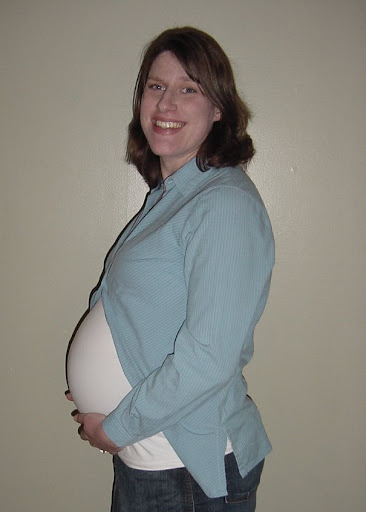
And for those who are interested I'm rapidly nearing the end of pregnancy so that my be part of my brain power problem.


Saturday, April 11, 2009

What a Nature Walk looks like for us

It's been awhile since we have gotten over to the arboretum.
Combine sporadic weather with a tired distracted pregnant mama and some things just don't happen. The problem is that this is one that should happen more often!
I can't say nature walks are all that refreshing for me right now but the kids have so much fun hiking the trails and running around those wide open spaces that I just simply must make going a priority.
I have set aside Fridays as a break from schoolwork and a day to catch up and go on outings, but I've ranked cleaning the house as much higher a priority than taking the kids out. Not good.
So here's a pledge to do better and to blog about our nature time to help keep me accountable.


Eating lunch before our hike. We sat in the Oak circle this time.


At the start of our hike. Wesley really enjoyed all of the bridges on this trail, 6 in all!


Waiting for slow-poke mom to catch up.


A surprise along the way.


Tom wanting a close up of his flower.


And that's all folks! We had a good time and enjoyed the exercise and change of scenery. This mama's bladder doesn't hold out for more than a couple of hours right now but it's worth the effort.